Is this mold or kahm yeast?
Found a white film on top of your sauerkraut, kimchi, or pickles? Don’t panic. Nine times out of ten it’s harmless. Answer three quick questions and we’ll tell you straight.
Question 1 of 3
What color is the growth on top?
The side-by-side, at a glance
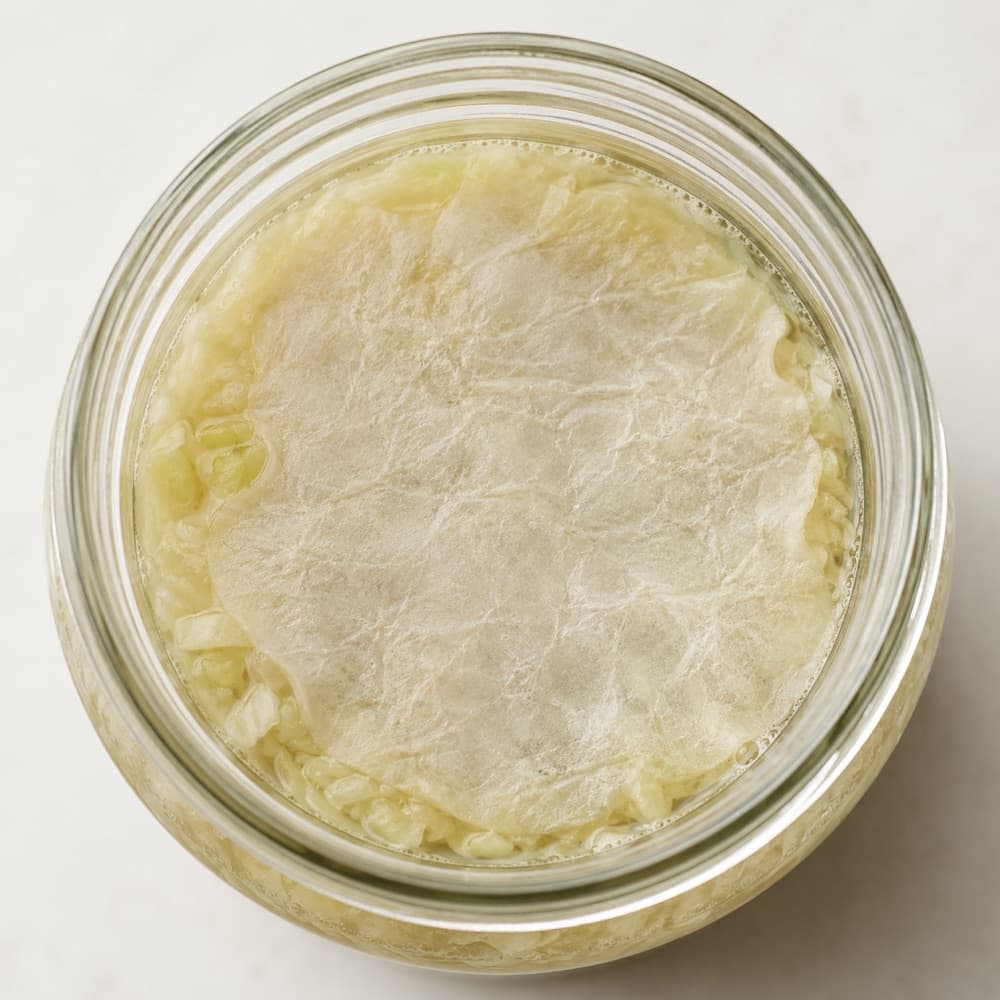
Kahm yeast
Harmless, skim it
- Flat, thin white or cream film
- Smooth or wrinkly, never fuzzy
- Sits flat on the surface
- Skim with a clean spoon, re-submerge
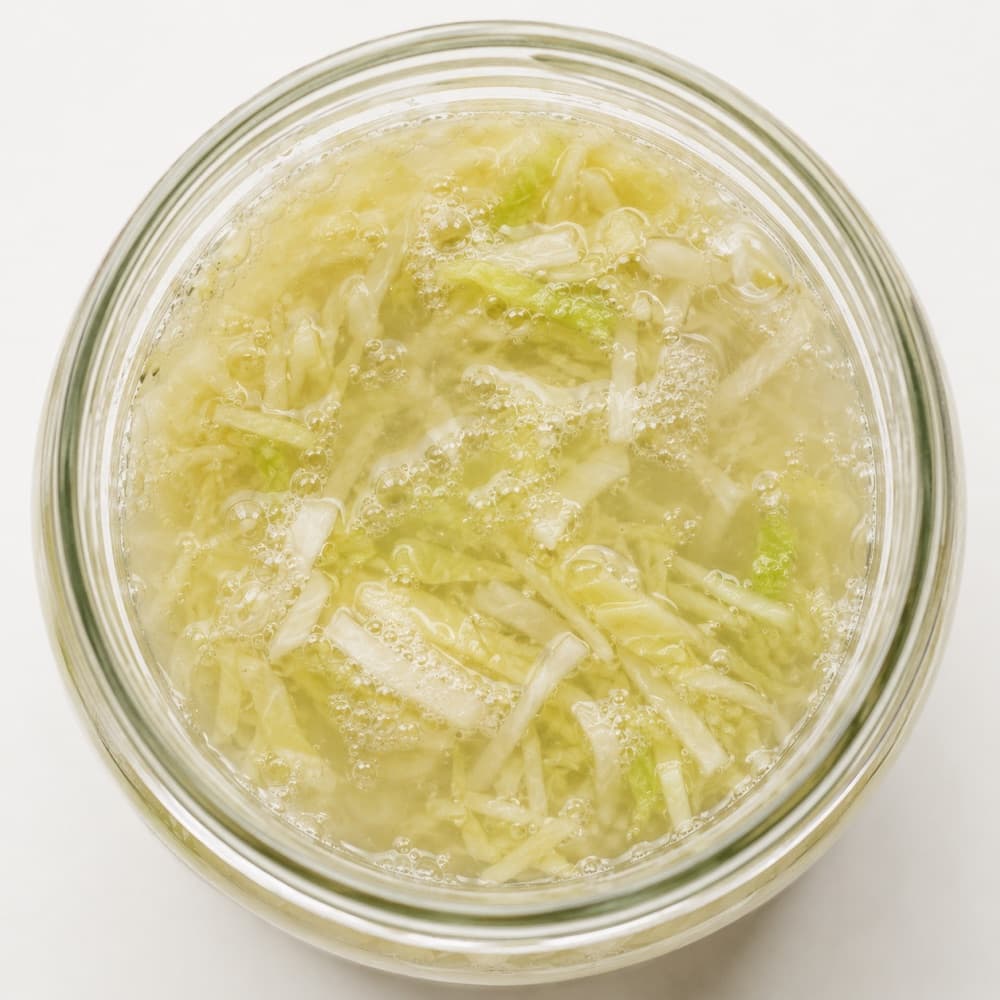
Healthy ferment
All good, carry on
- Bubbles rising through the brine
- Cloudy brine with sediment
- Sour, clean, vinegary smell
- A clear pellicle can be normal too
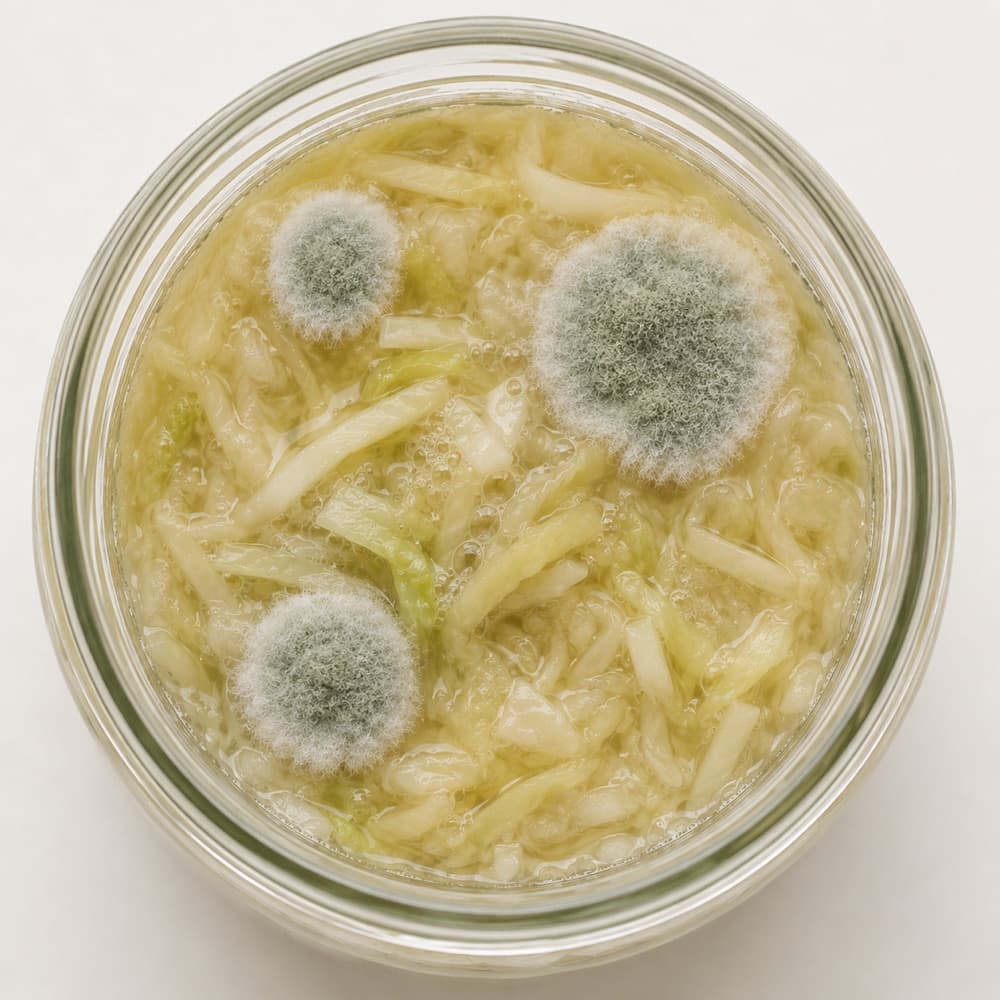
Mold
Discard the batch
- Fuzzy, hairy, or cottony texture
- Green, blue, black, gray, or pink
- Raised, often circular spots
- Toss it, don't scrape and eat
One thing that should calm you down
Lacto-fermentation is the safety mechanism, not the risk. Salt plus an anaerobic jar lets lactic-acid bacteria drop the pH below 4.6, which is exactly the environment harmful pathogens can’t survive. For a properly salted, submerged vegetable ferment, botulism isn’t the thing to worry about. Keeping your veg under the brine is. Do that and you’ll rarely see anything but bubbles.
On the pH 4.6 threshold and botulism risk, see the USDA and the National Center for Home Food Preservation.
On the App Store
Ferment for iPhone
This page is the free version. The app keeps a visual troubleshooter in your pocket, walks you through every batch, and reminds you to skim and re-submerge so kahm and mold never get the chance to take hold.
Get it on the App Store7-day free trial, then $29.99/year or $4.99/month. Cancel anytime.
Get the mold-vs-kahm photo guide
A clean reference grid, plus salt ratios and the occasional batch tip. No spam, unsubscribe anytime.
Common questions
Is the white film on top of my sauerkraut mold?
Usually not. A flat, white, sometimes wrinkly film is almost always kahm yeast, and it's harmless. Skim it off with a clean spoon and make sure the cabbage stays under the brine. Mold is different: it's fuzzy, raised, or any color other than white (green, blue, black, gray, or pink).
What is kahm yeast?
Kahm yeast is a wild yeast that forms a thin, flat film on the surface of a ferment when it's exposed to air. It's not dangerous. It can add a slightly off or yeasty flavor if it builds up, so skim it whenever you see it and keep everything submerged.
How do I tell mold from kahm yeast?
Three checks. Color: kahm is only white or cream; any other color is mold. Texture: kahm is a flat, smooth film; mold is fuzzy, hairy, or cottony. Profile: kahm sits flat on the surface; mold often forms raised, circular spots.
Can I just scrape mold off and eat the rest?
For soft, high-moisture vegetable ferments, the safe move is to discard the whole batch rather than scrape, because mold roots can run deeper than what you see. This isn't a botulism issue (properly salted lacto-ferments are acidic enough that botulism isn't a concern); it's about quality and other molds. Kahm yeast, on the other hand, you simply skim.
Why does my ferment have bubbles and a cloudy brine?
That's a good sign. Bubbles mean active fermentation, and a cloudy brine with sediment is completely normal. It's the lactic-acid bacteria doing their job. Neither one is mold.
Is fermented food with kahm yeast safe to eat?
Yes. Skim off the film, confirm the vegetables underneath look and smell clean and sour, make sure everything is submerged, and keep fermenting. Kahm yeast is a cosmetic and flavor nuisance, not a safety problem.